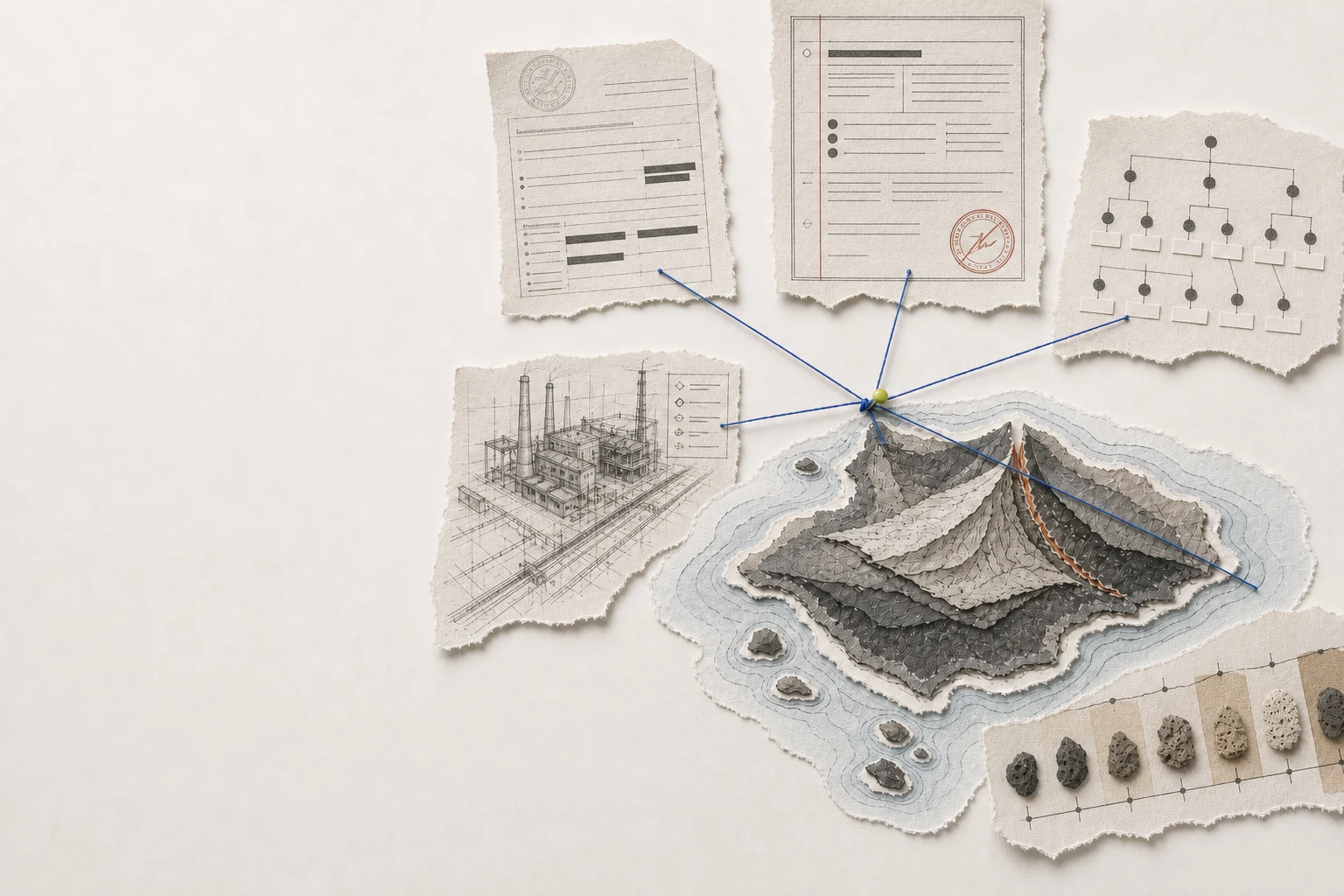
Some of the most important things happening in the world are not hidden.They are scattered.

The answer rarely lives in one source. It may sit partly in a filing, partly in a policy record, partly in who owns an asset, and partly in the physical or institutional constraint that carries a change. Each fact can be correct and still fail to explain the system.

SourceryOne is the analytical system behind an independent intelligence practice built for that gap. It composes those fragments into a traceable account of dependencies, forces, and evidence gaps—without losing where each claim came from.

See three cases
  • Filings
  • Policy
  • Ownership
  • Infrastructure
  • Timing

Correct facts can still produce the wrong picture.Read separately, they remain fragments. The consequential insight lives in how they connect.

Three examples of why the obvious answer fails.

SourceryOne is most useful when a category hides different operating structures, when reported capacity hides a physical constraint, or when credible institutions disagree. These are small public cuts from larger working scenes.

What does a weaker housing market actually do to building-products distributors?
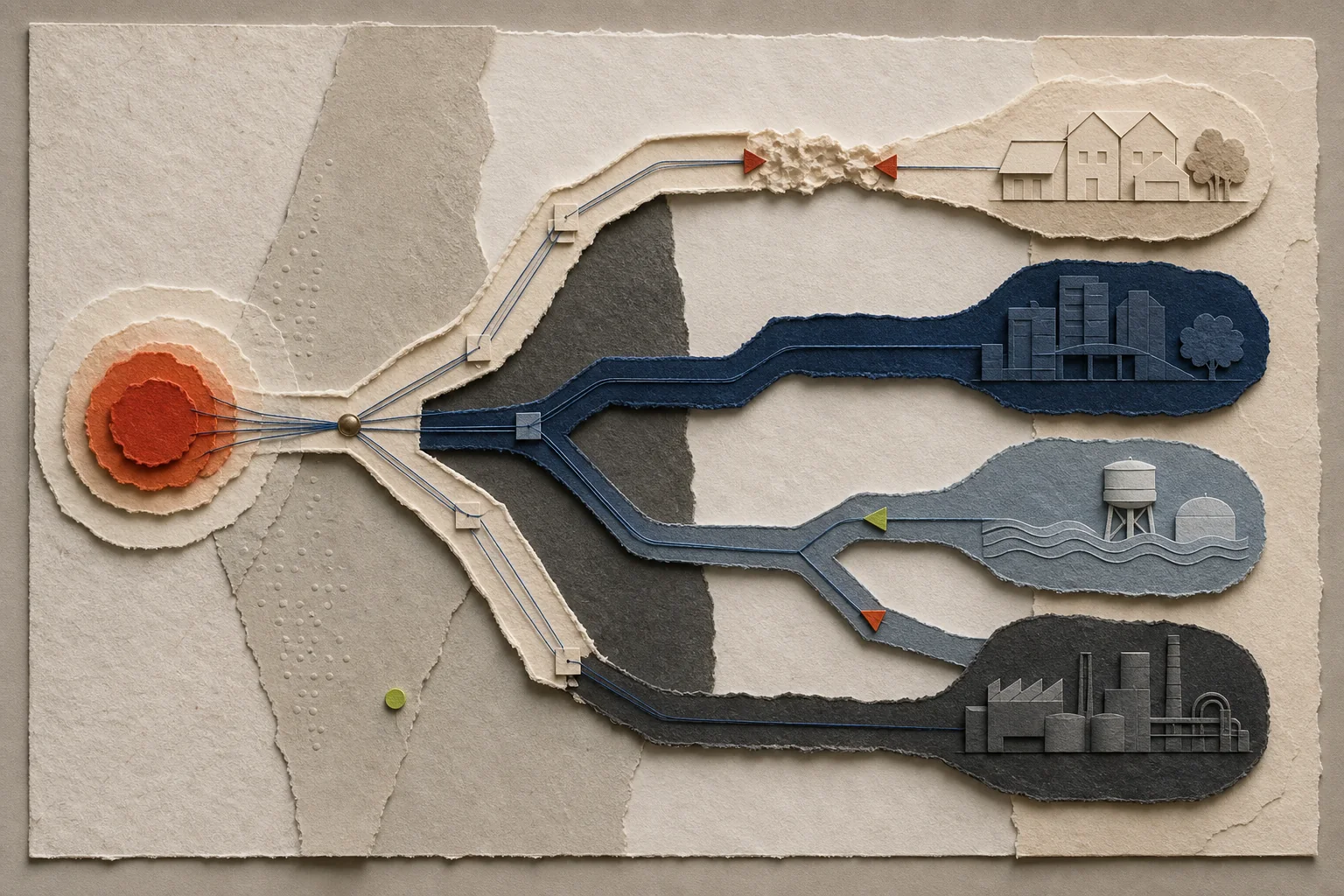
A layered-paper system map where one pressure branches toward residential, commercial, municipal, and industrial end markets by different paths
Residential exposure weakensNon-residential exposure risesNo single class direction
At first glance
All three companies seem tied to the same housing market.
What the sources actually show
They are not exposed in the same way. Ferguson says residential sales are falling while non-residential sales are rising. Builders FirstSource depends much more directly on housing starts and expects demand to soften. Fastenal’s construction business is non-residential, so a housing slowdown does not reach it through the same channel.
What SourceryOne sees
Putting the three companies under one “building products” label hides the important difference. The better question is not whether building products rise or fall. It is which customers and markets each company actually depends on.

Why this matters

One sector label can hide three different risks.Treat these companies as one exposure and a buyer can pay for protection that is not there—or overlook a business that is more resilient than it appears. SourceryOne shows which customers and channels carry the pressure before that assumption reaches the decision.

Where the record stops

This evidence cut establishes direction, not the magnitude of the next cycle or a forecast for any company.

Public record

Primary material behind this public cut.
  1. 01Ferguson Form 10-KTTransition period ended 31 Dec 2025 (opens in a new tab)
  2. 02Builders FirstSource Form 10-KFiscal 2025 (opens in a new tab)
  3. 03Fastenal Form 10-QQuarter ended 30 Jun 2026 (opens in a new tab)

Keep the source attached.

Source

Every important statement keeps a clear path back to the original document and date.

Connect the facts.

Context

Ownership, supply, policy, infrastructure, and timing are read together instead of as separate notes.

Keep judgment accountable.

Judgment

Tools help gather and test the work. A person still decides what the evidence means and what can responsibly be said.

The advantage is seeing structure before it becomes obvious.

SourceryOne applies a proprietary research method to consequential questions that cross markets, institutions, ownership, policy, and infrastructure.

A purpose-built analytical system helps compose the evidence, test competing explanations, and preserve the path back to source. Technology strengthens the work. Expert judgment decides what the record can support, where it stops, and what matters for the decision.

Find the dependency behind the headline.
A market can look diversified and still rely on one supplier, asset, rule, or assumption. A strong company can depend on something fragile it does not control.
Trace how change travels.
A tariff, ownership change, or shortage can help one part of a business and hurt another. SourceryOne keeps those effects separate instead of averaging them into a tidy answer.
Build an account that can withstand scrutiny.
Every important claim keeps its source, date, limits, and open questions. The final account shows what the evidence supports and where judgment begins.

A small public look

Each important statement stays tied to its source. Each connection explains why it belongs. Each test records what changed and what did not. The chain supports the final judgment without making it.

sourceOriginaldate · document · checksum
whoIdentityname · role
connectionReasonwhy · source
changeEffectdirection · limit
conclusionAnswersources · caveats

The conclusion remains inspectable because every link retains its source, reason, effect, and limit.

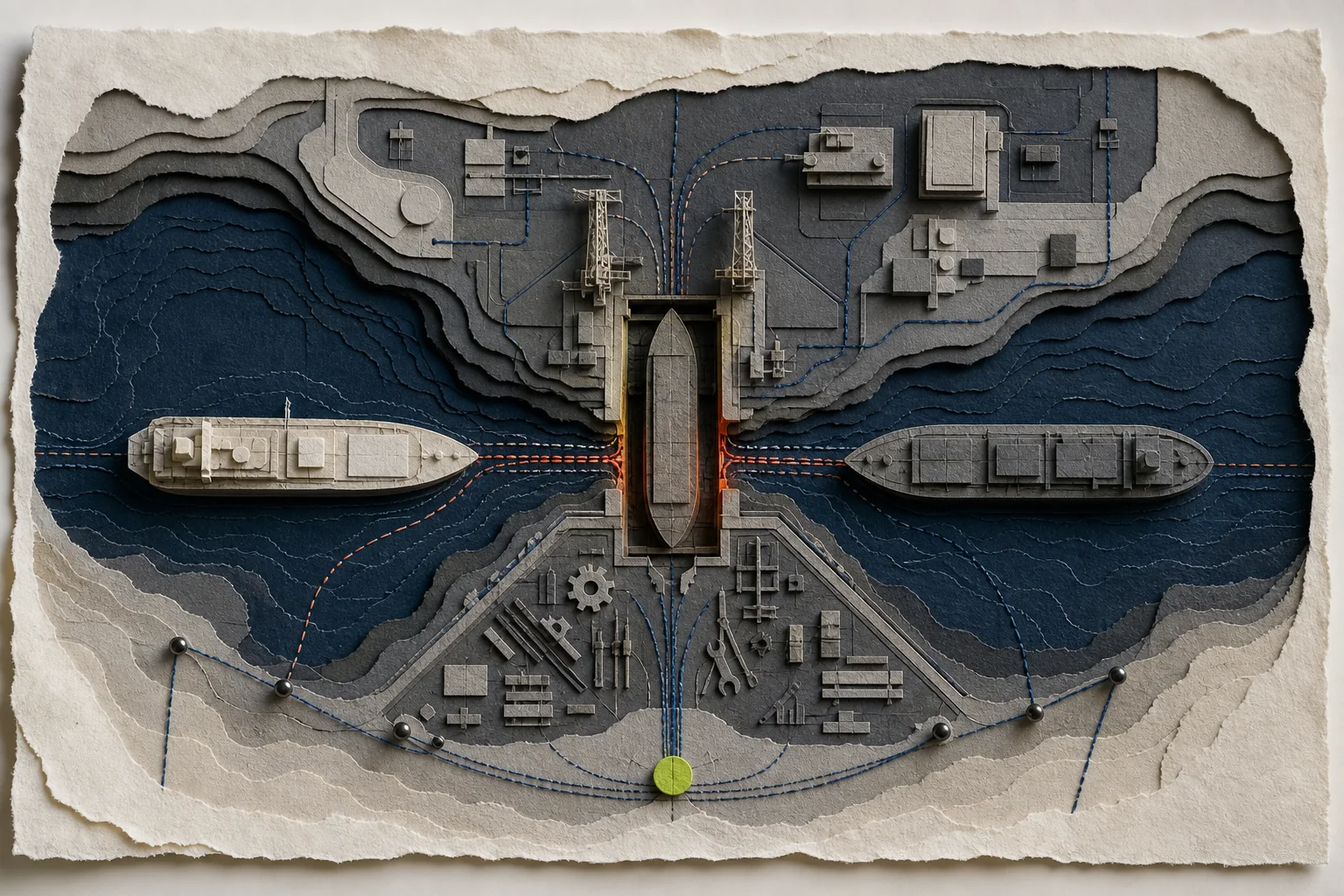
Layered construction-paper archipelago showing islands connected by currents and pressure lines
A decision map of dependencies, leverage points, second-order effects, and unknowns.

A bad map can make an expensive decision look obvious.

Clients rarely need another pile of information. They need to know what their decision touches: what they rely on, where a problem can spread, who controls the fragile pieces, and what nobody knows yet. SourceryOne defines a clear boundary around the question and maps how the parts connect before any recommendation is made.

What you rely on
the people, assets, rules, and suppliers behind the obvious relationship
Where you have leverage
the places where one move can change several outcomes
What else could change
where solving one problem may create another
Whether the backup is real
whether a hedge or fallback depends on the same weak point
What remains unknown
where the evidence ends and the recommendation must stop

A careful answer says where it could be wrong.

  1. 01

    No answer is not the same as zero.

    If something has not been computed, it remains unknown. SourceryOne never turns an absence into a result.

  2. 02

    Every conclusion has a date and a boundary.

    A conclusion is bounded by the question, evidence, and moment it was built from.

  3. 03

    Disagreement does not disappear.

    When good sources conflict, the difference stays visible instead of being averaged away.

  4. 04

    Publication remains a human judgment.

    Automation can organize and test the record. Expert review decides what is ready to leave the practice.

SourceryOne works by introduction.

New work begins through trusted relationships and direct context.There is no public intake or self-serve access.